Chapel at Trinity Commons
Like Yeilding Chapel and St. Stephen the Martyr Catholic Church, the chapel in Trinity Commons: Episcopal Campus Ministry Center was designed to arrange an altar aroudn a central altar. Unlike the two larger spaces, the furniture in Trinity Commons is easily rearranged. The worshiping community has utilized this feature.
From its opening in 2007, its original configuration arranged worshipers in curved rows of chairs on either side of the altar. The ambo was between these seats for the congreation, facing the altar, opposite the ambo was the baptismal font. Unfortunately, I do not have photos of this original arrangement, but five hanging lamps were positioned in the center of the room over altar and they remain there.
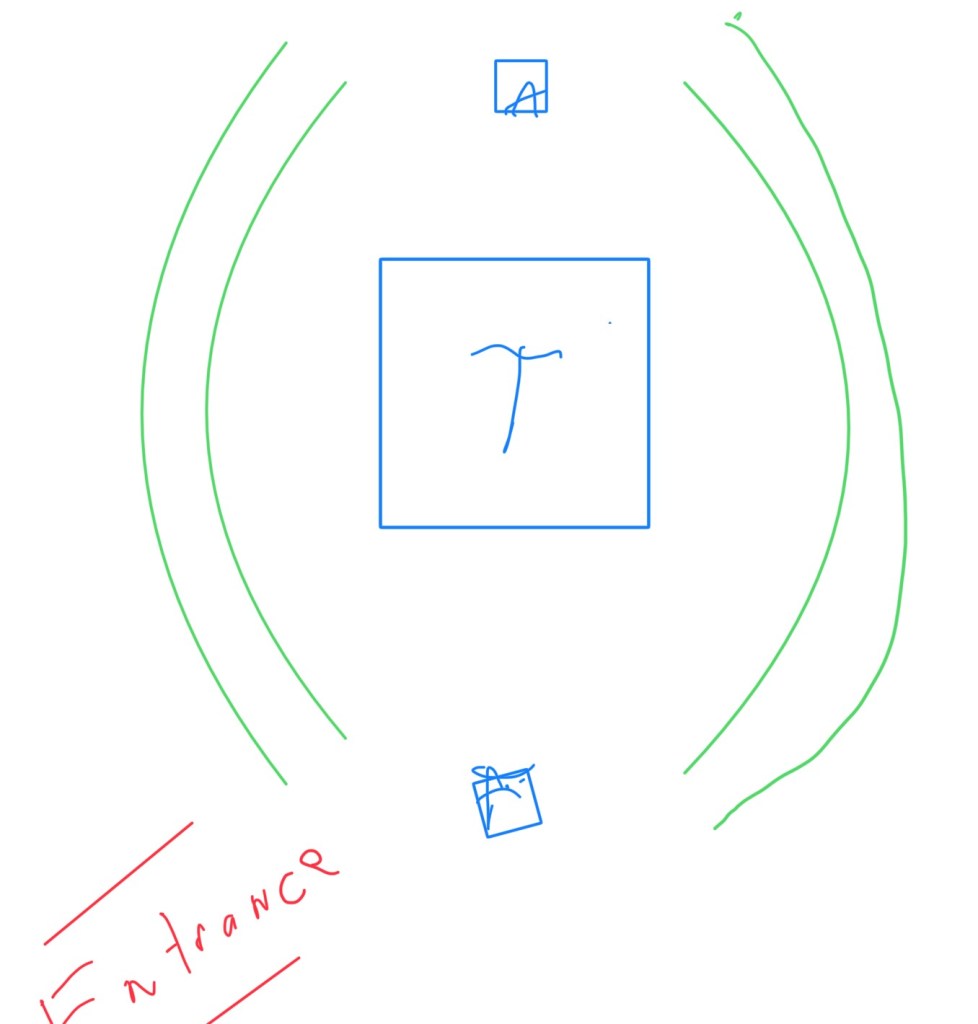
The chapel, which is located on the second floor of the student center, remained in its original configuration for many years, but after the departure of Trinity Commons’s first chaplain, subsequent clergy moved the altar to near the windows behind where the ambo stood and arranged the chairs facing it. Presumably, this more conventional arrangement was a more welcoming and conventional environment for students.
In his classic Architecture for Worship (1973), architect E. A. Sovik recommended that worship spaces be built to be re-arrangeable and regularly be rearranged. This would guard against worshipers’ temptation to localize the sacred in any one place. While Torgerson (2007) noted that Sovik’s spaces, with few exception, were not actually rearranged, the Trinity Commons chapel has realized this desire of the Liturgical Movement.
Click here to return to Yeilding Chapel.
This page is part of “Spaces for Worship: A Birmingham-Based Introduction,” a section of Magic City Religion, written by the editor and funded by Samford University’s Center for Worship and the Arts.
 Magic City Religion