Temple or Meeting House?
The most basic distinction among buildings erected for worship is whether a given structure is understood as a temple (a house of God) or as a meetinghouse (a place for people to assemble). In the Bible, we read about both.

In 1 Kings, chapter 8, King Solomon completes the Temple (House of God) in Jerusalem and the Ark of the Covenant containing the tablets inscribed with the Ten Commandments is placed within it. Then Solomon stands or kneels with the people outside of the Temple in the courtyard prayed to God. Only priests went into the temple itself. (Solomon Dedicating the Temple in The Story of the Bible from Genesis to Revelation [Philadelphia: Charles Foster, 1873]).
In the Gospel of Luke, chapter 4, we read that Jesus visited his hometown of Nazareth and “went to the synagogue on the Sabbath day, as was his custom.” The Greek word “synagogue” means “congregation” or “assembly.” For centuries it has referred to both a congregation and the building in which a congregation meets. Indeed wherever the congregation met, even if it wasn’t originally built to be a syanaogue, was a synagoge. The important thing about the synagogue Jesus participated in is that it was focused on people meeting to pray and to hear the reading and interpretation of scripture. If they had a purpose-built structure it was a meetinghouse in which people assembled, not a temple in which a holy object was enshrined.
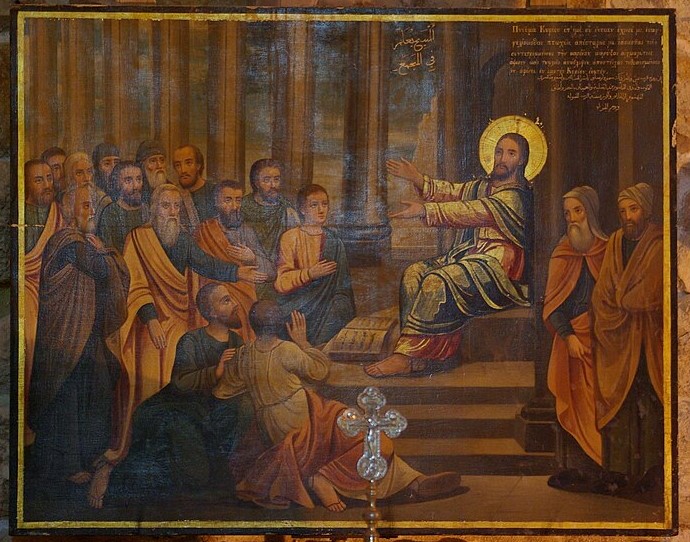
In the Acts of the Apostles (part of the New Testament) we see that after the resurrection of Jesus, Christians worshiped both in the courts surounding the Jerusalem Temple and in synagogues. But while the only temple dedicated to God was in Jerusalem, synagogues (congregations) were found throughout the Mediterranean world and beyond. Futhermore the Romans destroyed the Temple in the year 70, leaving Christian with no specific House of God.
[Paul and his compantions] came to Antioch in Pisidia. And on the Sabbath day they went into the synagogue and sat down. After the reading of the Law and the Prophets, the officials of the synagogue sent them a message, saying, “Brothers, if you have any word of exhortation for the people, give it.” 16 So Paul stood up and with a gesture began to speak:
Acts 20:14-16 (NRSVue)
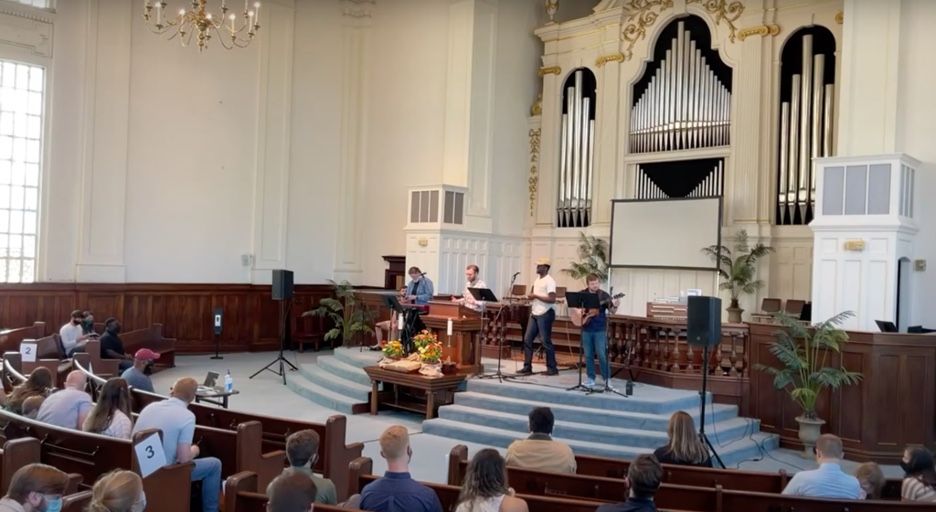
Thus, all churches are in a sense meetinghouses, and in some, large and small, that is the main emphasis.
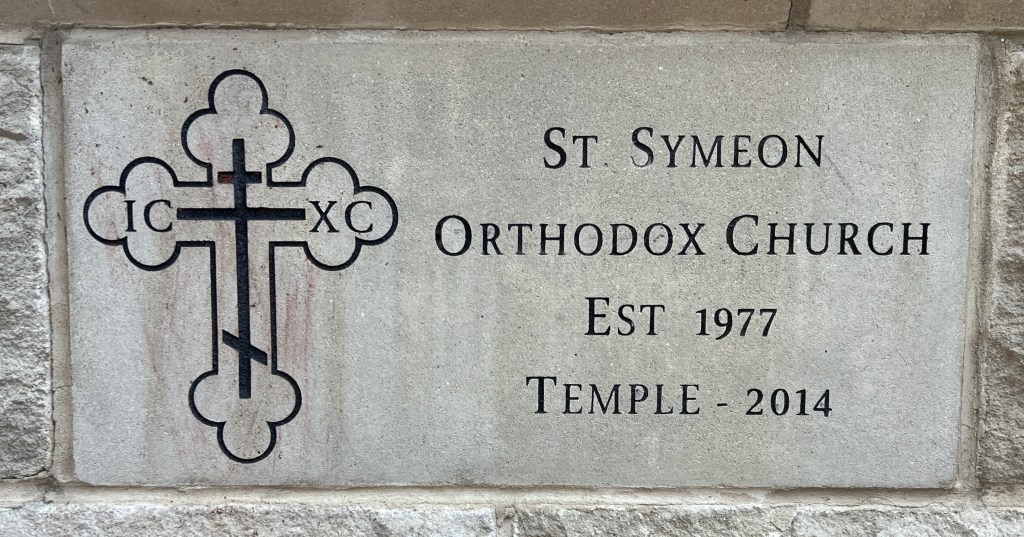
Over the centuries, however, many Christians began to think of their buildings as temples too. For example, the cornerstone of St. Symeon Othrodox Church states that the church (i.e., the congregation) was established in 1977, but its “temple” (current church building) was erected in 2014.
Another famous Birmingham-area church understood as a temple is the Shrine of the Most Blessed Sacrament in Hanceville. Mother Angelica, a Birmingham-based Roman Catholic nun who founded the Eternal Word Television Network stated she received a direct message from Jesus in June 1996, “Build me a temple and I will help those who help you.” Thus what she had initially envisioned as “a small farm chapel” for her community’s daily prayer services became a large richly ornamented church used for the same purposes but “desiged to be as beautiful as possible, befitting the infinite dignity of God Whose House it is” (“The Shrine’s Story“).

In the shrine, and in other Roman Catholic churches, the presence of God is affirmed as not only everywhere, but uniquely present in he consecrated bread of the eucharist, where Christ is not only spiritually, but bodily present. In all of Birmingham’s Catholic churches, the consecrated bread (or host) is reserved in an ornamented secure box known as a tabernacle behind the central altar. Sometimes it displayed on the altar in a stand called a monstrance.
Even in Christian traditions that resist localing God in an sacramental object or image, when the church building begins to be seen as saying things about God, it begins to take on characteristics of a temple.
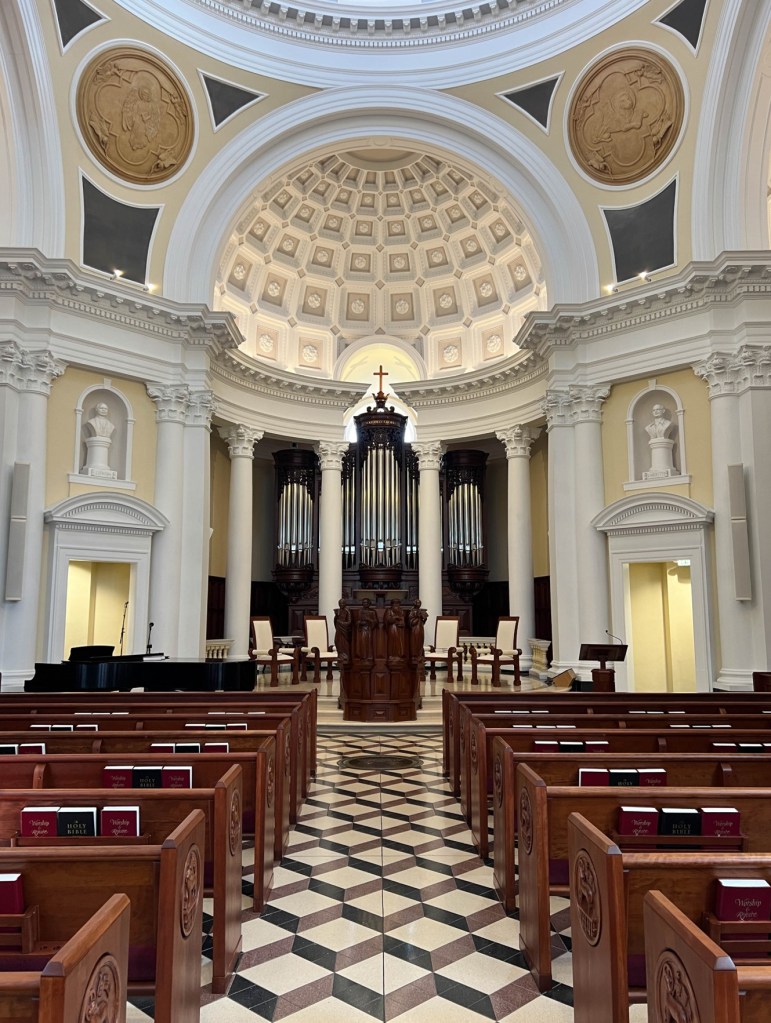
While not all church buildings are intended to be temples as well meetinghouses, it is useful to bring these ideas to every church building:
- How does the building suggest that it is a special place, where worshipers should be mindful of God’s presence?
- How does the building encourage worshipers to encounter each other as members of Christ’s body?
Click here to proceed to the next page.
This page is part of “Spaces for Worship: A Birmingham-Based Introduction,” a section of Magic City Religion, written by the editor and funded by Samford University’s Center for Worship and the Arts.
 Magic City Religion
