Centering Focus
One of four factors shaping the experience of worship spaces.
What object occupies the most prominent position in the church? Normally the action performed here “gives meaning and purpose to the entire service.” The object itself usually has both real and symbolic importance to worshipers (Kieckhefer 2022, 63). The two most common centering focuses in Birmingham churches are pulpits and altars. Among our eight examples an altar is central at the Cathedral Church of the Advent, the Cathedral of St. Paul, Independent Presbyterian Church, and Yeilding Chapel.


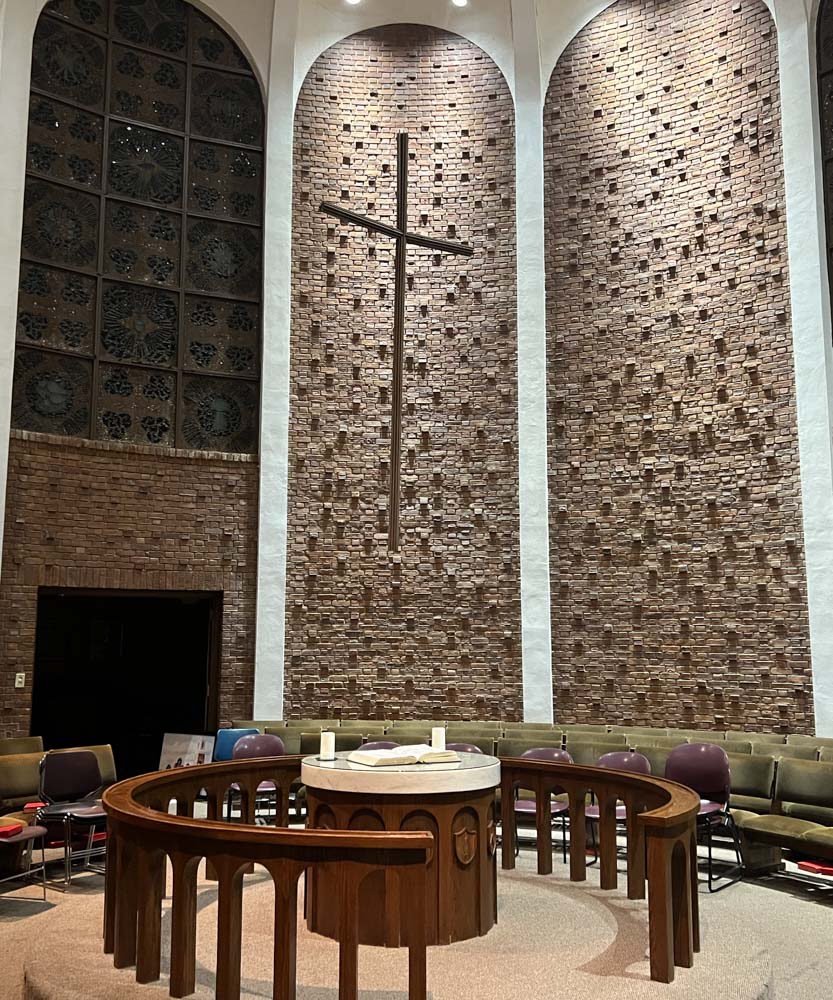
A pulpit is central at Sixteenth Street Baptist Church and Hodges Chapel.


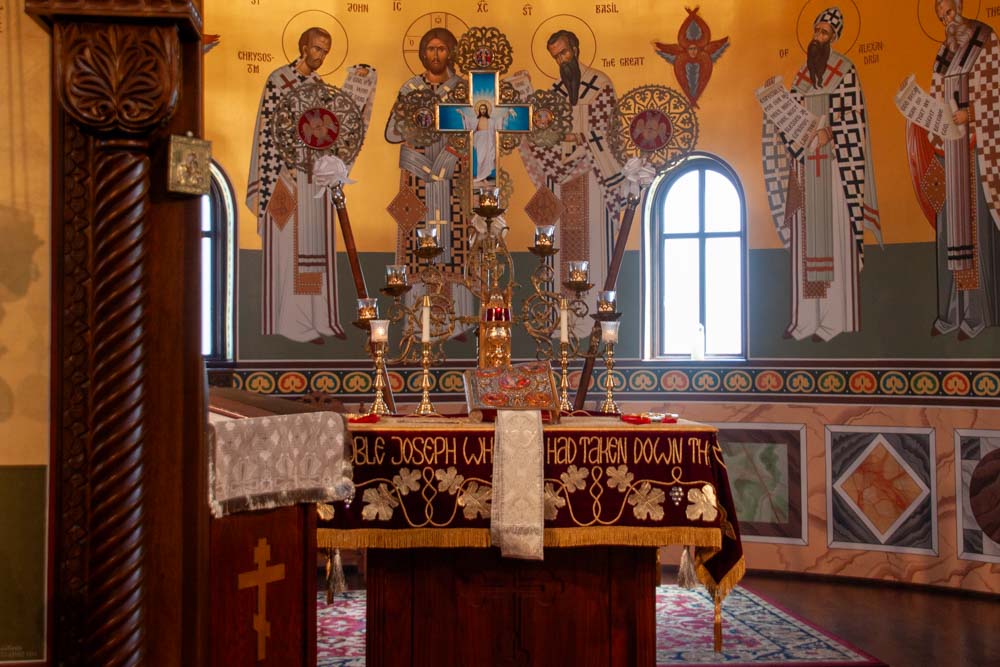
The situation is a bit more complimore complicated at the St. Symeon Orthodox Church and Church of the Highlands. At St. Symeon, the altar is most definitely the focal point of the liturgy and is at the center of the sanctuary, but it is often not visible to the people because it is behind the iconscreen and the royal doors in the iconscreen in front of the altar are often closed. This diffuses the visual centrality of the altar and extends the focus to the whole sanctuary and icon screen and indeed to the whole, highly decorated, church.

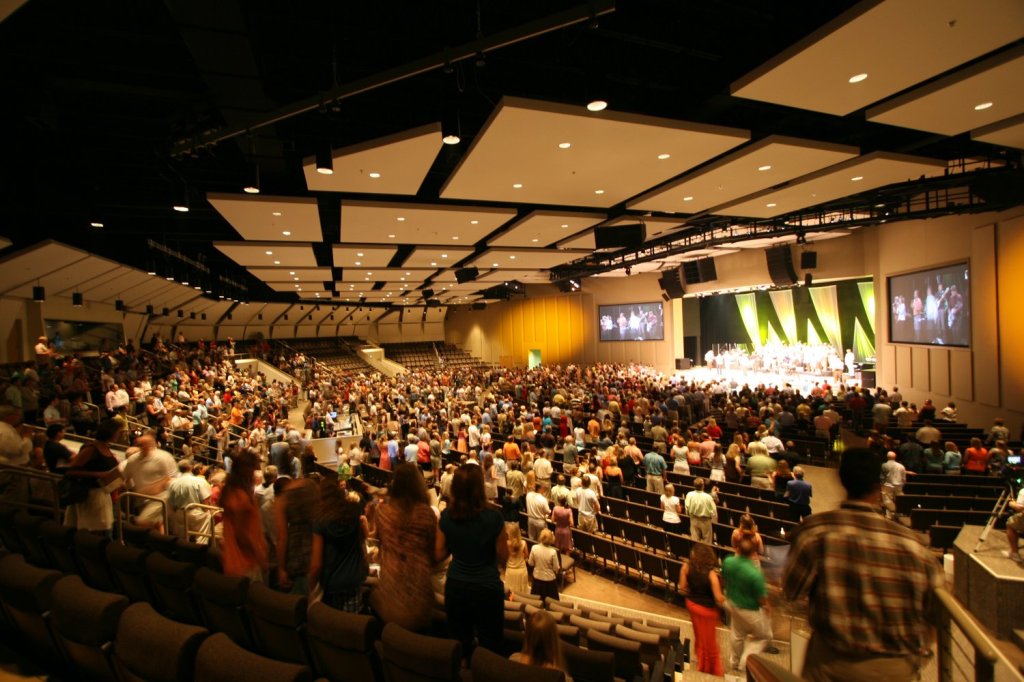
At Church of the Highlands the focus is the large stage from which the worship team leads the congregation in worship and the pastor preaches his sermon. Here arguably there is more focus on the people, and the atmosphere created by the church’s extensive projection and lighting system.
In most of these churches there are additional focuses. These include such things as lecterns, presiders’ chairs, choir lofts, tabernacles, and icons. The relationships between these focuses is important. Those relationships are part of what shapes the next factor: spatial dynamics.
This post is part of “Spaces for Worship: A Birmingham-Based Introduction,” a section of Magic City Religion, written by David R. Bains, published in 2024, and funded by Samford University’s Center for Worship and the Arts.
 Magic City Religion