By David R. Bains, founder and editor of Magic City Religion
What does Christain worship look like in Birmingham, Alabama? In spring 2025, students in my Christian Worship: History and Theology course at Samford University examined fourteen more examples for Magic City Religion. (Previous studies were in 2021 and 2023.) In the course we discuss at least fourteen distinct historical “families” of worship, and this semester’s student essays discuss examples of seven of them ranging from Byzantine (St. George Melkite and St. Symeon Orthodox) to Charismatic (Arise and Met by Love). Geographically, the congregations ranged from Arise on the east side of Irondale, south to Christ Church (Methodist), and east to Shiloh Bapitst Church in Brighton.
The sample of churches this year particularly helped expand our website’s coverage of “more liturgical” congregations. In addition to the Byzantine churches, five of the congregations celebrate the eucharist (or Lord’s supper) at all of the their Sunday services. These churches are in three different denominations: Roman Catholic (Cathedral of St. Paul and Our Lady of Sorrows), Episcopal Church (Ascension and St. Stephen’s), and Presbyterian Church (USA) (Edgewood).




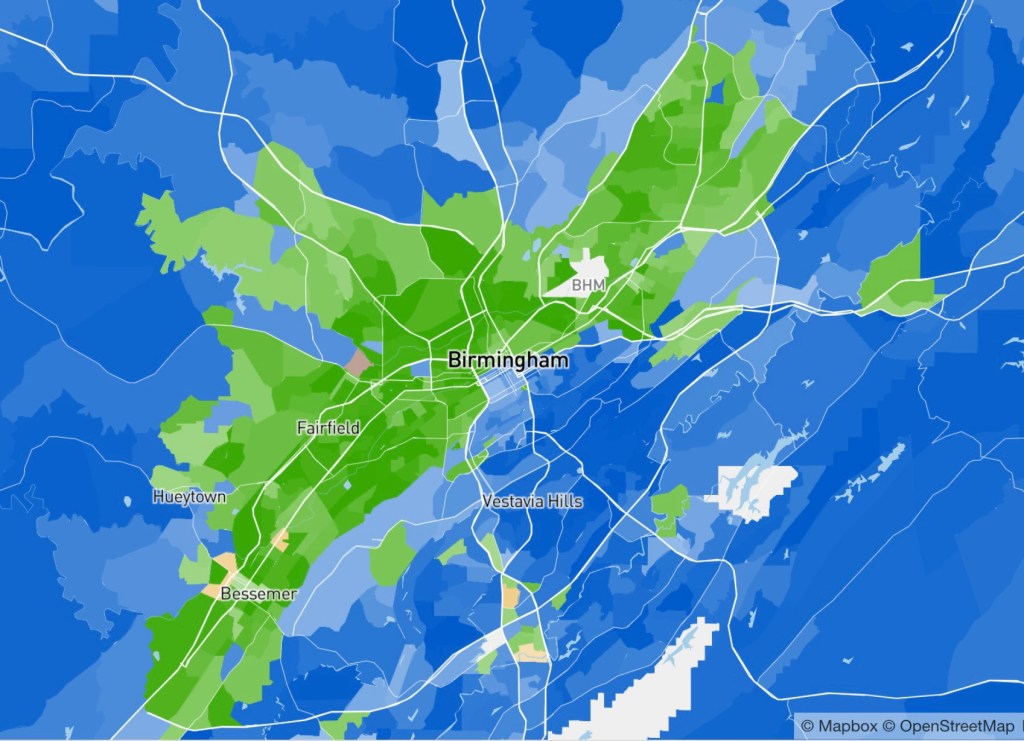
According to the 2020 Religion Census in terms of both number of congregations and number of adherents the largest denominational traditions in Jefferson County, where Birmingham is located, are the Baptists (424 congregations) followed by the Methodists (158 congregations). These congregations are divided among several different Baptist and Methodist denominations. Even more structurally divided are the 249 non-denominational churches included in the census. While many Samford students have a strong well-founded assumptions about what to expect at a non-denominational church, these do not aways hold true as you will read in the essay on Mountain Brook Community Church.
There is also considerable diversity in worship within the Methodist and Baptist traditions. Locally most of the larger historically White congregations in the Methodist tradition offer both contemporary and traditional worship services. The essay on Christ Church focuses on a traditional service at a congregation that recently left the United Methodist Church to join the Global Methodist Church. Shiloh Baptist Church in Brighton is a congregation that sustains the two-part Sunday service once common among African American Baptists. First there is deacon-led “devotion” were songs are “lined out” or sung in “call and response.” This then gives way to the faster tempo of the “worship” led by the choir.
The last two essays revisit churches whose worship was first studied for Magic City Religion in spring 2021 as congregations were still dealing with Covid-19 restrictions. They are Sixteenth Street Baptist Church, the City of Birmingham’s oldest Black Baptist church, and Dawson Memorial Baptist Church which celebrated its one hundred anniversary in the services examined.
Varieties
There are several other varieties among the essays worthy of note:
The student authors’ relation to the services studied varies. Some are insiders who work at the churches they discuss (Dawson and Shiloh). Others encountered a very different tradition from their own in preparing this essay (St. George, St. Symeon, St. Paul).
Most of the essays focus on Sunday morning services, but three essays examine services of a different type. Met by Love is a student fellowship that worships in a classroom at Samford on Monday nights. The essay at St. Symeon focuses on an evening service of vespers. And the essay on St. Stephen examines a Sunday evening “Celtic Service.”
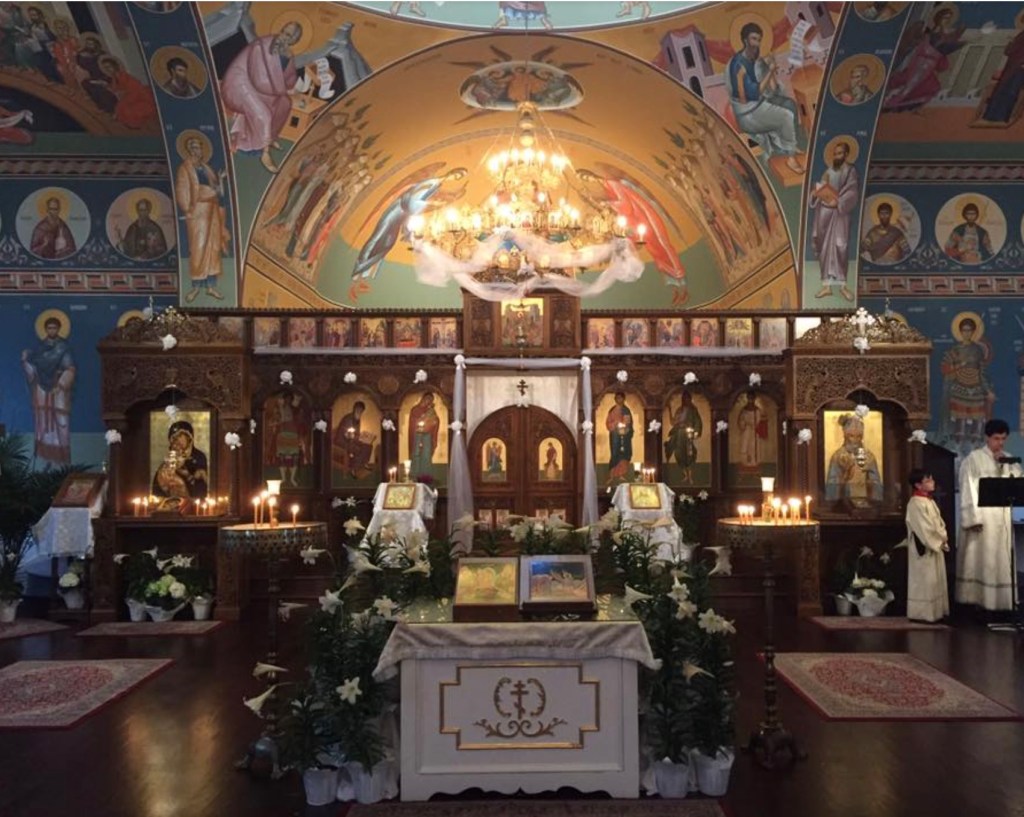
Several essays play special attention to the aesthetics of the worship space. The extensive decorations at St. Paul, St. Symeon, and St. George impressed the writers, but so too did the natural simplicity of St. Stephen’s.
The congregational composition between churches is also strikingly different. For example, the congregations at Our Lady of Sorrows and Dawson ranged across generations, while that at Christ Church‘s traditional service was decidely older, younger members of the congregation presumably attend the contemporary service.
While writers do not explicitly address it, like nearly all churches in Birmingham, most of the congregations studied here are racially homogenous. One of the chief reasons for this is that Birmingham’s ecclesiastical and residential landscape are still shaped by its history of legal segregation. Eight of the congregations examined were established when segregation was the law. This legal oppression made the Black Church an important institution. It still is as the essays on Shiloh and Sixteenth Street show. Concerning some of the other churches, we might say the “White Church” is still an important institution as well. A few recent Birmingham churches were founded on an intentionally interracial basis. But all are influenced by Birmingham’s historic divide between the city proper in Jones Valley and the “Over the Mountain” suburbs.
In framing their reflections students draw on course readings and their own backgrounds. Most engage with the idea of “telos” (goal or purpose) and “ethos” (character) that Edward Phillips introduces in his Purpose, Pattern, and Character of Worship (Abingdon Press, 2020). They also reflect on what is “sacramental,” that is what are the means by which God is particularly known or experienced. In some cases they also reflect personally on what they can affirm about the services and what they want to treat with caution.
I hope these snapshots of worship in Birmingham prove interesting and useful. I’ve listed these from 2025 along with those from past years below by denominational or liturgical tradition. If you have any comments, I’d love to hear them! Please reach out through the comments, at drbains@samford.edu or 205-726-2879.
Essays on Christian Worship in Birmingham from 2021, ’23, ’25
Anglican and Episcopal
- The Abbey’s Sunday Worship: Enacting Community
- Cathedral Church of the Advent’s Band-Led Service: A Glimpse into the Heart of the Advent
- Episcopal Church of the Ascension, Sunday Worship and Easter Vigil: At the Center: The Eucharist and the Life of Worship
- Restoration Anglican Church’s Pre Launch Gathering: True to Its Name
- St. Stephen’s Episcopal Church’s Celtic Worship Service: Holistic, Natural, and Faithful
Baptist (African American founded)
- Bethel Baptist Church of Collegeville’s Worship and Preaching
- Greater Shiloh Missionary Baptist Church, Sunday Worship Service: A Community Standing Stronger Together
- Sardis Missionary Baptist Church, Sunday Worship: Transformation in Tradition
- Shiloh Baptist Church, Sunday Worship: Built to Endure: A Church Rooted in Resilience
- Sixteenth Street Baptist Church, Sunday Worship: Redefining History and Reaching Community (2021)
- Sixteenth Street Baptist Church, Sunday Worship: Worship as Witness (2025)
Baptist (White founded)
- Christ Fellowship Church: Worshipping as God’s People
- The Church at Brook Hills’s Easter Worship Service (2021)
- The Church at Brook Hills’s Good Friday Service: Corporate Confession and Hope (2023)
- Dawson Memorial Baptist Church, 100 Year Anniversary Sunday: Found Faithful: Remembering God’s Steadfast Love through Worship at Dawson (2025)
- Dawson Memorial Baptist Church’s Sunday Morning Service: Found Faithful as God’s People (2021)
- Double Oak Community Church, Mt. Laurel: A Church that Values Community
- Mountain Brook Baptist Church’s Contemporary Worship Service: Worship Across Generations
- Shades Mountain Baptist Church: Like You Never Left Home
- Vestavia Hills Baptist Church Sunday Worship: Traditional Worship in an Untraditional Building
Byzantine Liturgical Tradition
- St. George Melkite Church’s Liturgies: A Birmingham Community’s Spiritual Journey (2021)
- St. George Melkite Greek Catholic Church, Divine Liturgy: The Christ-like Mysticism of Byzantine Worship (2025)
- St. Symeon the New Theologian Orthodox Church, Great Vespers: Worshipping with All of Heaven
Christian Church (Disciples of Christ)
Methodist
- Canterbury United Methodist Church’s Contemporary Worship Service: Individual Relationships in Community
- Christ Church Birmingham’s Traditional Worship Service: Community Inspired by True Discipleship
- First United Methodist Church of Birmingham, Sanctuary Service: More Than a Building: Using History to Focus on the Future
- St. Paul African Methodist Episcopal Church Smithfield, Sunday Worship: One Big Christ-Led Family
- Trinity United Methodist Church’s “Contact” Worship Service: The Second Service
Non-denominational Evangelical
- Auburn Community Church, Birmingham: Relentless Pursuit
- Church of the Highlands: “Passionate about God”
- Iron City Church’s Worship Service: Dedication to Education in Unity and Diversity
- Mountain Brook Community Church’s Sunday Service: Multi-Generational and Blended Worship
- Mountaintop Church’s Sunday Worship Service: Keeping it Personal
- Redeemer Community Church’s Easter Worship Service
Pentecostal and Charismatic (Non-Denominational)
- Arise Birmingham, Sunday Gathering: A Family Congregation
- King’s Way’s Sunday Service: Making Room for the Holy Spirit
- Samford Met By Love, Monday Gathering: Simple, Spirit-Led Worship
Presbyterian
- Briarwood Presbyterian Church, Sunday Worship: A Beautiful Culture of Excellence
- Covenant Presbyterian Church, Sunday Worship: A Community Called
- Edgewood Presbyterian Church, Sunday Worship: Embracing Faith, Tradition, and Community
Roman Catholic
- Cathedral of St. Paul, Sunday Mass
- Our Lady of Sorrows Catholic Church, Sunday Mass: Grace and Tradition
Published June 19, 2025.
 Magic City Religion